Relationship of Pipeline Route to Long Term Integrity
Keywords:
Scope 8, Pipe Integrity, Risk Management, Undersea Piping, Clean Water Distribution, Corrosion, Headloss, PDAM Makassar, Gusung IslandAbstract
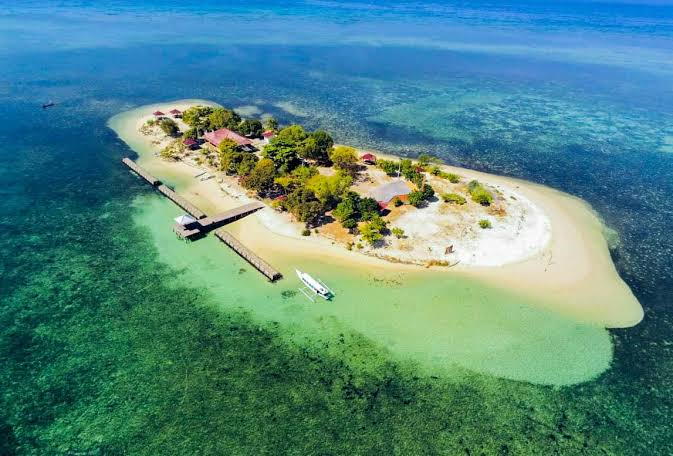
The provision of clean water to island regions such as Gusung Island by the Makassar Regional Water Company (PDAM Makassar) requires a complex and high risk seaborne pipeline system. This article examines Scope 8 as the comprehensive management of pipeline assets, encompassing planning, construction, operation, maintenance, and continuous evaluation of system performance. The aim is to identify key risks and analyze factors affecting pipeline integrity. The study results indicate that key risks include corrosion due to the marine environment, headloss, mechanical damage due to waves, currents, and shipping activities, as well as potential leaks due to material fatigue and joint failure, which are also influenced by seabed geotechnical conditions and environmental changes. Pipe integrity is largely determined by the selection of appropriate materials such as HDPE or coated steel, the implementation of protection systems such as coatings and cathodic protection, and the implementation of risk based inspections and regular condition monitoring. With the implementation of integrated and data driven risk management, the seaborne pipeline system can operate more safely, efficiently, and sustainably, thereby supporting the sustainability of clean water distribution in island regions.
Downloads
References
N. Syahriani, S. Palutturi, A. B. Birawida, and H. Hidayanty, “Clean Water Supply as an Indicator for Healthy Island in Makassar City,” Open Access Maced. J. Med. Sci., 2022, doi: 10.3889/oamjms.2022.8350.
N. Makrakis, P. Psarropoulos, D. Chatzidakis, and Y. Tsompanakis, “Optimal Route Selection of Offshore Pipelines Subjected to Submarine Landslides,” Open Civ. Eng. J., 2022, doi: 10.2174/18741495-v16-e220922-2022-30.
B. Zerouali, Y. Sahraoui, M. Nahal, and A. Chateauneuf, "Reliability-based maintenance optimization of long-distance oil and gas transmission pipeline networks," Reliab. Eng. Syst. Saf., vol. 249, p. 110236, 2024, doi: 10.1016/j.ress.2024.110236.
A. Durap and C. Balas, "Risk assessment of submarine pipelines: A case study in Turkey," Ocean Eng., vol. 266, p. 112079, 2022, doi: 10.1016/j.oceaneng.2022.112079.
H. Palippui, “Analysis Of The Installation Of Subsea Pipelines To Support The Need For Clean Water In Supporting Tourism Development On Kayangan Island,” Marit. Park J. Marit. Technol. Soc., 2022, doi: 10.20956/maritimepark.v1i1.19926.
S. Abanyie, B. Ampadu, N. A. Frimpong, and E. E. Y. Amuah, “Impact of improved water supply on livelihood and health: Emphasis on Doba and Nayagnia, Ghana,” Innov. Green Dev., 2023, doi: 10.1016/j.igd.2023.100033.
R. Holm, M. Tembo, V. Kasulo, M. Gavanala, and L. Chilongo, “Institutional, technical and financial sustainability of rural piped drinking water supply on a freshwater island: Case study of Likoma Island, Malawi,” Lakes & Reserv. Sci. Policy Manag. Sustain. Use, 2022, doi: 10.1111/lre.12403.
P. Yu, R. Hu, J. Zhang, Q. Yang, J. Zhao, L. Cao, and C. Zhu, "Numerical study on local scour characteristics around submarine pipelines in the Yellow River Delta silty sandy soil under waves and currents," Deep Undergr. Sci. Eng., 2024, doi: 10.1002/dug2.12068.
X. Li, Y. Zhang, R. Abbassi, F. Khan, and G. Chen, "Probabilistic fatigue failure assessment of free spanning subsea pipeline using dynamic Bayesian network," Ocean Eng., vol. 239, p. 109323, 2021, doi: 10.1016/j.oceaneng.2021.109323.
Y. Deng, Z. Tang, L. Yang, Q. Lin, and W. Silva-Araya, “Small islands as laboratories and testbeds for resilient water supply,” Nat. Water, vol. 3, pp. 1085–1088, 2025, doi: 10.1038/s44221-025-00515-7.
A. Y. Kyew, “Problems and Solutions in Improving Subsea Pipeline Competency and Quality: A Comprehensive Literature Review,” Collab. Eng. Dly. B. Ser., 2023, doi: 10.62012/collaborate.v1i2.50.
M. W. Ralagi, S. Li, T. Biko, O. E. Emmanuel, and M. Rezaie, “Building Water-security Solutions for Pacific Island Communities,” Adv. Res., 2025, doi: 10.9734/air/2025/v26i31330.
J. Gheuens, N. Nagabhatla, and E. Perera, “Disaster-Risk, Water Security Challenges and Strategies in Small Island Developing States (SIDS),” Water, 2019, doi: 10.3390/w11040637.
M. Sapkota, M. Arora, H. Malano, A. Sharma, and M. Moglia, “Integrated Evaluation of Hybrid Water Supply Systems Using a PROMETHEE–GAIA Approach,” Water, vol. 10, p. 610, 2018, doi: 10.3390/w10050610.
P. Madala, “Predictive Maintenance in Water Treatment Plants: A Machine Learning-Based Fault Diagnosis and Optimization Approach,” in 2025 6th International Conference on Electronics and Sustainable Communication Systems (ICESC), 2025, pp. 1532–1538. doi: 10.1109/icesc65114.2025.11212605.
W. Xu, X. Zhou, K. Xin, J. Boxall, H. Yan, and T. Tao, “Disturbance Extraction for Burst Detection in Water Distribution Networks Using Pressure Measurements,” Water Resour. Res., vol. 56, 2020, doi: 10.1029/2019wr025526.
M. Forde, A. Cashman, and K. Mitchell, “Sustainability of water resources in Caribbean small island developing states: an overview,” Discov. Sustain., vol. 5, 2024, doi: 10.1007/s43621-024-00478-x.