Undersea Pipeline Installation Perspective
Maritime Challenges in Clean Water Distribution from Kendari City to Bokori Island
Keywords:
Clean Water Distribution, Maritime Installations, Bokori Island Underwater Pipeline, Operational RisksAbstract
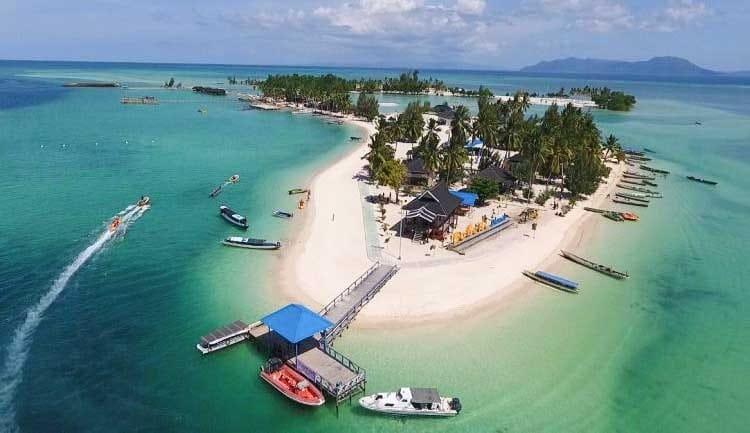
The availability of clean water is a basic need that is crucial in supporting human life and the development of tourism areas. Bokori Island, as a leading tourist destination, faces limited natural clean water sources, so that the water needs of tourists are not optimally met. This perspective article aims to evaluate the clean water distribution system through an underwater pipeline network from Kendari City to Bokori Island, with a primary focus on mapping maritime challenges in Indonesian waters. The method used is a qualitative analysis of marine environmental conditions, human activities, and operational aspects. The identification results show that although the shallow water route facilitates installation, there are significant risks from human activities such as ship traffic, as well as oceanographic dynamics such as ocean currents and corrosion levels. In conclusion, the underwater pipeline distribution system is a feasible solution, but its success is highly dependent on mitigating external technical risks and selecting appropriate protective materials. This abstract emphasizes the importance of a comprehensive approach without complex mathematical modeling in coastal infrastructure planning.
Downloads
References
N. Dwipayanti, A. Nastiti, H. Johnson, J. Loehr, M. Kowara, P. De Rozari, S. Vada, W. Hadwen, M. Nugraha, and B. Powell, "Inclusive WASH and sustainable tourism in Labuan Bajo, Indonesia: Needs and opportunities," J. Water Sanit. Hyg. Dev., vol. 12, no. 11, pp. 765–775, 2022, doi: 10.2166/washdev.2022.222.
D. Maulina, A. S. Fauzisar, D. Hernawati, and L. Septya, "Feasibility of investment installation using SWRO in Seribu Island, Indonesia," Biol. Environ. Pollut., vol. 1, no. 2, pp. 68–76, 2021, doi: 10.31763/bioenvipo.v1i2.537.
K. Welsh and J. Bowleg, "Interventions and solutions for water supply on small islands: The case of New Providence, The Bahamas," Front. Water, vol. 4, p. 983167, 2022, doi: 10.3389/frwa.2022.983167.
T. Suyono, A. P. Irawan, W. A. Pranoto, K. Umar, W. Hardi, S. Abbas, and A. Fudholi, "Development of interisland freshwater supply system with micro hydropower system," Civ. Eng. Archit., vol. 11, no. 1, pp. 272–282, 2023, doi: 10.13189/cea.2023.110131.
S. Patel, F. Abdellatif, M. Alsheikh, H. Trigui, A. Outa, A. Amer, M. Sarraj, A. A. Brahim, Y. Alnumay, A. Felemban, A. Alrasheed, A. Halawani, H. Jifri, H. Jaleel, and J. Shamma, "Multi-robot system for inspection of underwater pipelines in shallow waters," Int. J. Intell. Robot. Appl., vol. 8, no. 1, pp. 14–38, 2024, doi: 10.1007/s41315-023-00309-8.
F. Novico, I. Kurniawan, A. Egon, and D. Merli, "Application of offshore HDPE pipes route design in North Maluku, Indonesia," Ilmu Kelaut. Indones. J. Mar. Sci., vol. 26, no. 1, pp. 45–56, 2021, doi: 10.14710/ik.ijms.26.1.45-56.
C. Xue, Y. Yang, P. Zhao, D. Wei, J. Gao, P. Sun, Z. Huang, and J. Jia, "Impact of ship traffic on the characteristics of shelf sediments: An Anthropocene prospective," Front. Mar. Sci., vol. 8, p. 678845, 2021, doi: 10.3389/fmars.2021.678845.
K. Hu, X. Bai, and M. Vaz, "Numerical simulation on the local scour processing and influencing factors of submarine pipeline," J. Mar. Sci. Eng., vol. 11, no. 1, p. 234, 2023, doi: 10.3390/jmse11010234.
E. Zhao, Y. Dong, Y. Tang, and J. Sun, "Numerical investigation of hydrodynamic characteristics and local scour mechanism around submarine pipelines under joint effect of solitary waves and currents," Ocean Eng., vol. 219, p. 108553, 2021, doi: 10.1016/j.oceaneng.2020.108553.
J. Zhou, H. Wang, S. Yang, and Y. Liu, "Numerical study on response of subsea pipeline subjected to anchor damage," Ocean Eng., vol. 317, p. 120179, 2025, doi: 10.1016/j.oceaneng.2024.120179.
R. Iswara and A. Afriansyah, "Arrangement of submarine cables and pipelines as part of marine spatial planning in Indonesia," Jambe Law J., vol. 5, no. 1, pp. 1–38, 2022, doi: 10.22437/jlj.5.1.1-38.
R. E. Melchers, R. Jeffrey, I. Chaves, and R. Petersen, "Predicting corrosion for life estimation of ocean and coastal steel infrastructure," Mater. Corros., vol. 76, no. 4, pp. 776–789, 2025, doi: 10.1002/maco.202314201.
F. Jiang, S. Dong, and C. G. Soares, "A probability-based study on failure mechanism and quantitative risk analysis for buried offshore pipelines subjected to third-party impact loads, exploring the effects of spatial variability of soil strength," Mar. Struct., vol. 103, p. 103719, 2025, doi: 10.1016/j.marstruc.2024.103719.
A. Reda, M. A. Shahin, and P. Montague, "Review of material selection for corrosion-resistant alloy pipelines," Eng. Sci., vol. 39, p. 1373, 2025, doi: 10.30919/es1373.
X. Du, Y. Sun, Y. Song, W. Chi, Z. Xiu, X. Zhao, and D. Wang, "A novel strategy for fast liquefaction detection around marine pipelines: A finite element-machine learning approach," Front. Mar. Sci., vol. 12, p. 1518679, 2025, doi: 10.3389/fmars.2025.1518679.