The Paradigm of Installation-Oriented Planning
A Critical Evaluation of Route Selection and Corridor Planning for the Leupung-Banda Aceh Submarine Clean Water Pipeline
Keywords:
Route Selection, Alignment, Corridor Planning, Submarine Pipeline, HDPE, Feasibility StudyAbstract
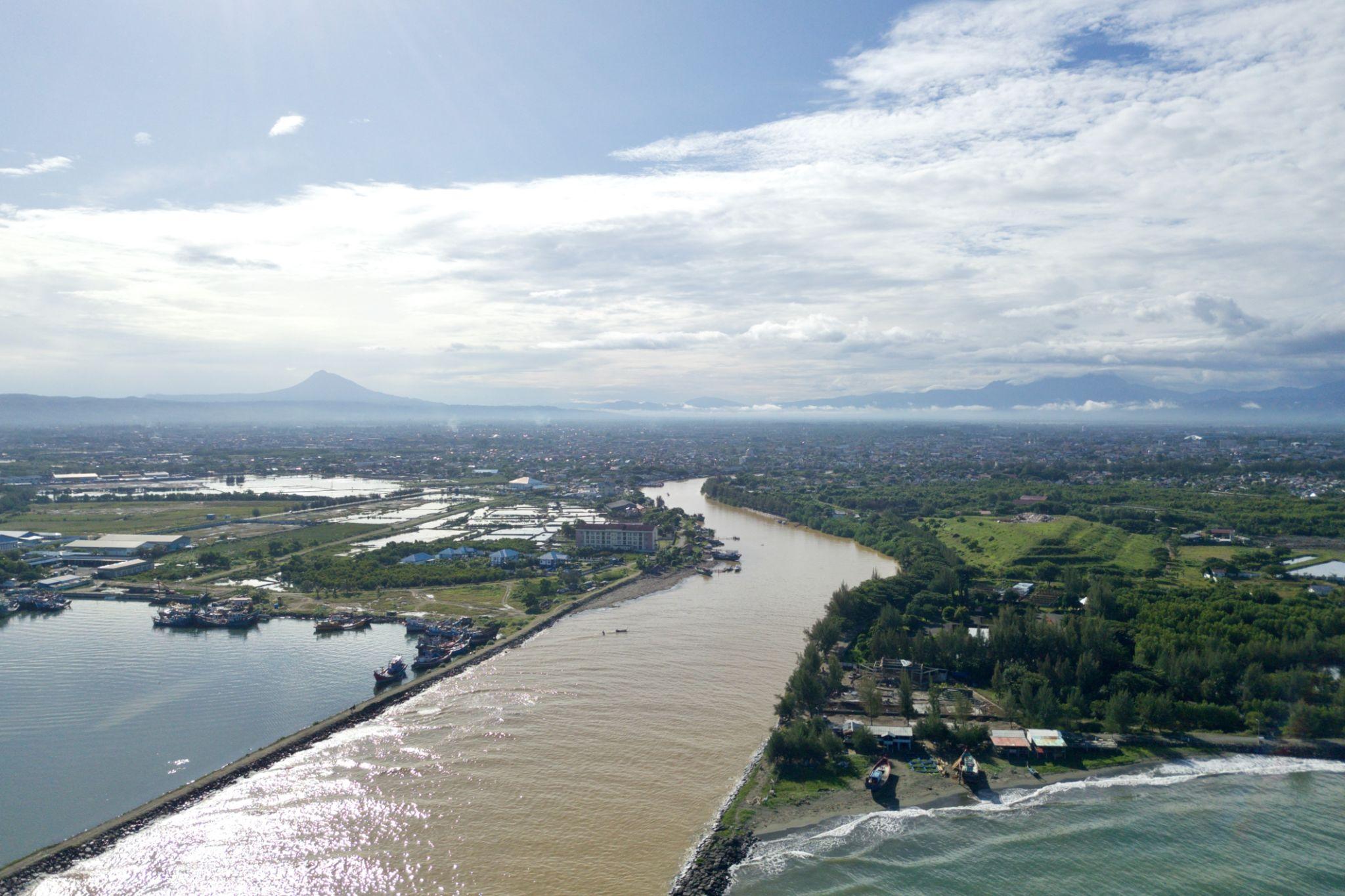
The selection of a pipeline route is a critical stage in submarine installation projects that dictates technical success and longterm cost efficiency. This article evaluates the corridor planning for a clean water transmission system from the Leupung mountain springs to the Banda Aceh distribution center, specifically comparing conventional land alignments with submarine alternatives. The study employs a comparative evaluation based on techno-economic criteria, including seabed geology, bathymetry, and natural disaster mitigation specifically addressing the landslide risks prevalent in the Aceh Besar region. The analysis emphasizes that route selection is an "installation-oriented planning" process rather than a mere geometric exercise. By integrating hydrodynamic stability factors and shore approach methods, the research argues that a submarine route utilizing High-Density Polyethylene (HDPE) provides superior resilience against the seismic and geological characteristics of Aceh.
Downloads
References
N. Makrakis, P. Psarropoulos, and Y. Tsompanakis, "GIS-based optimal route selection of submarine cables considering potential seismic fault zones," Appl. Sci., vol. 13, no. 5, p. 2995, 2023, doi: 10.3390/app13052995.
S. H. Alavi, M. Mashayekhi, and M. Zolfaghari, "Optimized seismic risk mitigation in pipeline routing using a metaheuristic GIS based approach," Sci. Rep., vol. 15, p. 25096, 2025, doi: 10.1038/s41598-025-17525-w.
N. Makrakis, P. Psarropoulos, and Y. Tsompanakis, "Optimal routing of gas pipelines in seismic regions using an efficient decision-support tool: A case study in Northern Greece," Appl. Sci., vol. 14, no. 23, p. 10970, 2024, doi: 10.3390/app142310970.
M. Z. Jiwa, "Lateral displacement control challenges for installation of floating HDPE pipeline," in Proc. 43rd Int. Conf. Ocean, Offshore and Arctic Eng. (OMAE2024), Vol. 5B: Ocean Engineering, 2024, Paper OMAE2024-127823, doi: 10.1115/OMAE2024-127823.
E. Zhao, Y. Dong, Y. Tang, and J. Sun, "Numerical investigation of hydrodynamic characteristics and local scour mechanism around submarine pipelines under joint effect of solitary waves and currents," Ocean Eng., vol. 219, p. 108553, 2021, doi: 10.1016/j.oceaneng.2020.108553.
B. Zhu, Q. Yang, T. Wang, M.-M. Lu, P. Mo, T. Hiraishi, and H. Mase, "Investigation on wave-induced responses of heterogeneous seabed around a buried pipeline based on nonstationary random field model," Comput. Geotech., vol. 174, p. 106119, 2024, doi: 10.1016/j.compgeo.2024.106119.
H. Zhai and D.-S. Jeng, "Impacts of wave-induced seabed response on local scour around a pipeline: PORO–FSSI–SCOUR–FOAM," Coast. Eng., vol. 190, p. 104424, 2024, doi: 10.1016/j.coastaleng.2023.104424.
F. Du, C. Li, and W. Wang, "Development of subsea pipeline buckling, corrosion and leakage monitoring," J. Mar. Sci. Eng., vol. 11, no. 1, p. 188, 2023, doi: 10.3390/jmse11010188.
N. Makrakis, P. Psarropoulos, D. Chatzidakis, and Y. Tsompanakis, "Optimal route selection of offshore pipelines subjected to submarine landslides," Open Civ. Eng. J., vol. 16, p. e220922202230, 2022, doi: 10.2174/18741495-v16-e220922-2022-30.
S. Bhowmik, "Machine learning-based optimization for subsea pipeline route design," in Proc. Offshore Technol. Conf. (OTC), Houston, TX, USA, 2021, Paper OTC-31031-MS, doi: 10.4043/31031-MS.
Y. Yan, J. Zhou, C. Xie, S.-Y. Yin, S. Hu, and R. Wang, "Quantitative estimation of pipeline slope disaster risk in China," Int. J. Disaster Risk Sci., vol. 14, no. 3, pp. 298–312, 2023, doi: 10.1007/s13753-023-00462-5.
D. Karabaić, M. Kršulja, S. Maričić, and L. Liverić, "The optimization of a subsea pipeline installation configuration using a genetic algorithm," J. Mar. Sci. Eng., vol. 12, no. 1, p. 156, 2024, doi: 10.3390/jmse12010156.
S. H. Alavi, M. Mashayekhi, and M. Zolfaghari, "Optimized seismic risk mitigation in pipeline routing using a metaheuristic GIS based approach," Sci. Rep., vol. 15, p. 25096, 2025, doi: 10.1038/s41598-025-17525-w.
T. Jiao, S. Zhang, J. Luo, H. Wang, Q. Peng, X. Zhu, Q. Xu, Y. Hu, and X. Chen, "Feasibility study on the use of coaxial strain-sensing cable to monitor strains on buried HDPE pipelines crossing a normal fault," IEEE Trans. Instrum. Meas., vol. 74, pp. 1–16, 2025, doi: 10.1109/TIM.2025.3604137.
R. Iswara and A. Afriansyah, "Arrangement of submarine cables and pipelines as part of marine spatial planning in Indonesia," Jambe Law J., vol. 5, no. 1, pp. 1–38, 2022, doi: 10.22437/jlj.5.1.1-38.