Why Subsea Pipeline Installation Is Not Merely a Construction Issue
A Conceptual Perspective from the Pemping Island Study
Keywords:
Subsea Pipeline, Route Selection, Seabed Interaction, Risk-Based Design, GeozhardAbstract
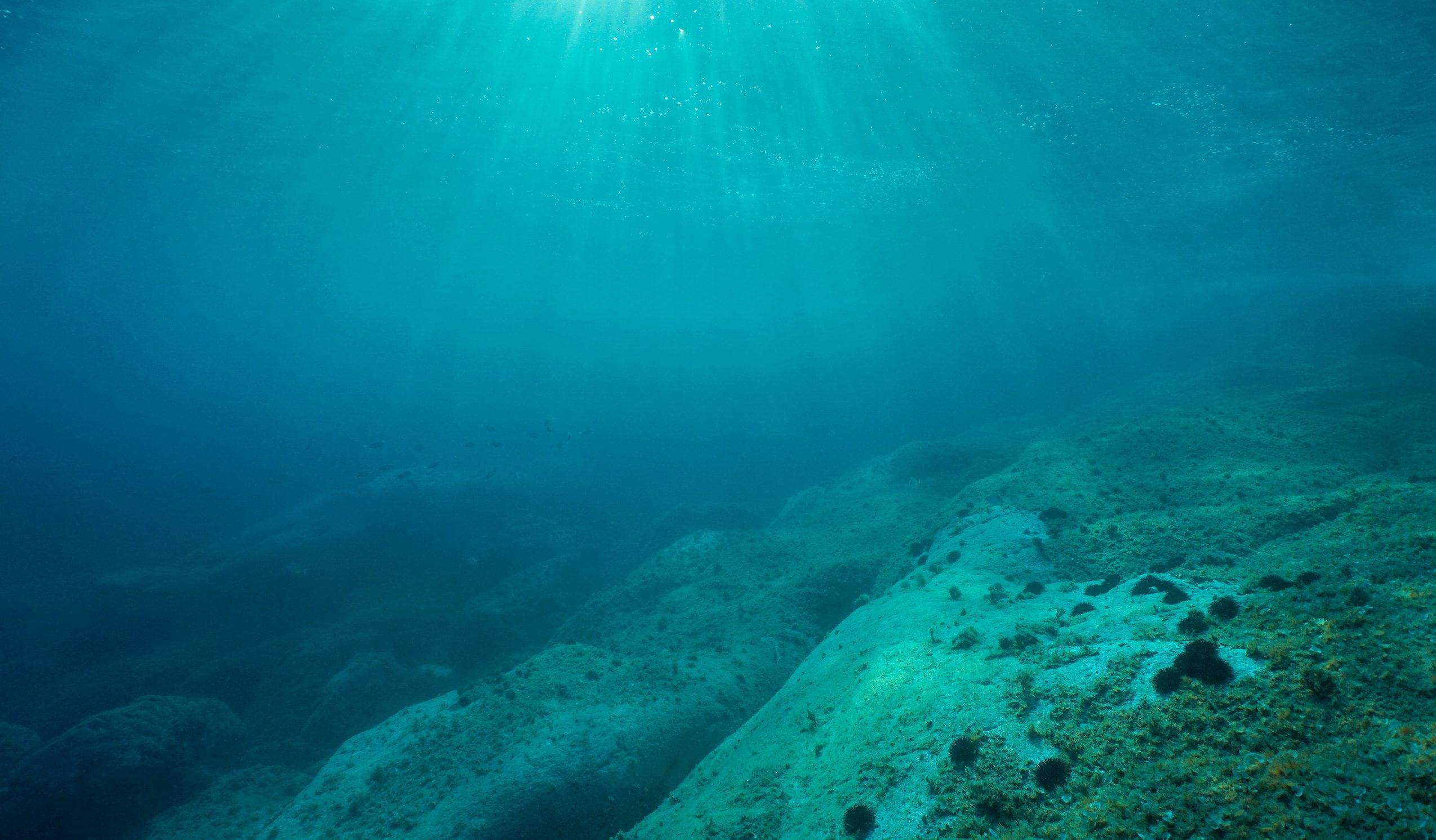
Subsea pipeline installation is a critical component of offshore energy infrastructure that has traditionally been understood as a technical construction activity on the seabed. However, developments in the literature indicate that the success of this system is not solely determined by the installation phase, but is highly dependent on early planning processes, particularly pipeline route selection and seabed condition assessment. This article aims to conceptually examine that subsea pipeline installation is a multidimensional process involving technical, spatial, and risk-based aspects. The study is conducted using a literature review approach, referring to studies on Pemping Island as well as subsea pipeline engineering literature. The results show that seabed conditions such as slope, sediment type, and geohazard zones have a significant influence on pipeline route stability. Therefore, subsea pipeline installation should be understood as part of a risk-based decision-making system, rather than merely a construction activity.
Downloads
References
N. Makrakis, P. Psarropoulos, D. Chatzidakis, and Y. Tsompanakis, “Optimal Route Selection of Offshore Pipelines Subjected to Submarine Landslides,” Open Civ. Eng. J., 2022, doi: 10.2174/18741495-v16-e220922-2022-30.
N. Makrakis, P. Psarropoulos, and Y. Tsompanakis, “GIS-Based Optimal Route Selection of Submarine Cables Considering Potential Seismic Fault Zones,” Appl. Sci., 2023, doi: 10.3390/app13052995.
K. Hafez, M. Abdelsalam, and A. Abdelhameed, “Dynamic on-bottom stability analysis of subsea pipelines using finite element model-based general offshore analysis software: a case study,” Beni-Suef Univ. J. Basic Appl. Sci., vol. 11, 2022, doi: 10.1186/s43088-022-00219-x.
D. M. Rocha et al., “Optimization of Submarine Pipeline Routes Considering Slope Stability,” 2015, doi: 10.4043/25711-ms.
I. Seyfipour, R. Mirghaderi, and M. Bahaari, “Buckling and stability of subsea HP/HT pipelines on laterally sloping seabeds,” J. Ocean Eng. Mar. Energy, vol. 9, pp. 1–23, 2022, doi: 10.1007/s40722-022-00245-y.
P. Huang, X. Meng, H. Dong, and L. Chong, “Numerical Modeling of Submarine Pipeline Scouring under Tropical Storms,” Water, vol. 13, p. 1425, 2021, doi: 10.3390/w13101425.
J. Lin, Y. Gao, Y. Guo, J. Liu, and L. Feng, “Wave-induced sloping seabed residual response around a buried pipeline,” Mar. Georesources Geotechnol., vol. 43, pp. 1355–1373, 2024, doi: 10.1080/1064119x.2024.2407844.
G. I. G. Imanova and E. M. E. Mammadli, “LAYING OF PIPELINES IN SUBSEA TAKING INTO ACCOUNT THE PROTECTION OF THE ENVIRONMENT,” PAHTEI-Procedings Azerbaijan High Tech. Educ. Institutions, 2022, doi: 10.36962/pahtei15042022-23.
N. Makrakis, P. N. Psarropoulos, and Y. Tsompanakis, “applied sciences GIS-Based Optimal Route Selection of Submarine Cables Considering Potential Seismic Fault Zones,” 2023.
P. Island, B. City, and R. Archipelago, “Zona laut,” vol. 6, no. 2, pp. 182–192, 2025.
I. H. Hariyanto, Khomsin, N. D. Adhi, A. Rachmat, and K. R. Noer, “Utilization of Bathymetry Data and Backscatter in Geohazard Identification Process at Drilling Stage,” in BIO Web of Conferences, 2025. doi: 10.1051/bioconf/202515707003.
J. Nicholls, “SS:Geohazard Risk Assessment-Pipeline integrity in geohazard prone seabed terrain - what is the real risk?,” 2009, doi: 10.4043/20206-ms.
F. Jiang and S. Dong, “Risk-based integrity model for offshore pipelines subjected to impact loads from falling objects,” Proc. Inst. Mech. Eng. Part M J. Eng. Marit. Environ., vol. 235, pp. 623–641, 2020, doi: 10.1177/1475090220960562.
G. Ismayilov, M. Shahlarli, and H. Ismayilova, “Integrated Fuzzy AHP and SAM Decision Framework for Offshore Pipeline Risk Management,” Int. J. Sustain. Risk Control, 2025, doi: 10.64599/eiar6923.
D. J. White and D. N. Cathie, Geotechnics for subsea pipelines. 2011.