Inter-Island Submarine Pipelines for Clean Water in Indonesia
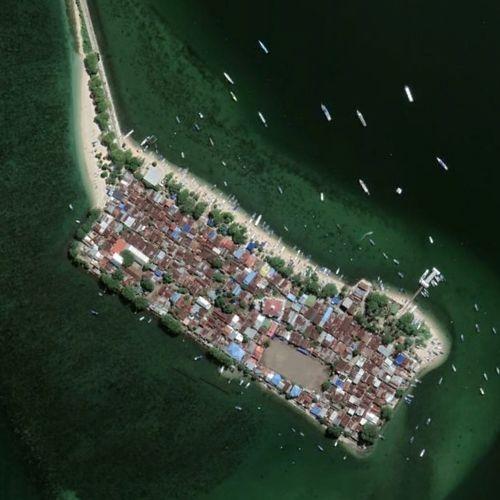
Bridging Technical Feasibility and Basic Service Provision (Case of Lae-Lae Island)
Keywords:
Inter-Island Submarine Pipeline, Clean Water, Basic Services, HDPE Subsea, Lae-Lae Island, Spermonde Archipelago, Water Pollution Index, Public Utilities, Indonesian Archipelagic InfrastructureAbstract
The provision of clean water in Indonesia’s archipelagic regions remains a significant challenge, particularly for small islands lacking adequate freshwater resources. Lae-Lae Island in Makassar represents a critical case, where all groundwater sources have been classified as lightly polluted due to seawater intrusion and domestic activities, while the water supply deficit reaches approximately 95,000 liters per day. This study aims to analyze clean water distribution issues from two main perspectives: technical aspects and basic service provision. The method employed is a literature review combined with comparative analysis of several submarine pipeline installations in Indonesia. The results indicate that the use of High-Density Polyethylene (HDPE) submarine pipelines is a technically feasible solution to distribute clean water from mainland Makassar to Lae-Lae Island, considering the relatively short distance and the availability of an existing municipal water supply network. Furthermore, successful implementations in other regions demonstrate that this technology is reliable and applicable. However, the primary challenges lie in policy and institutional frameworks, where inter-island pipeline systems have not yet been positioned as integrated basic service infrastructure. Therefore, an integrated approach combining engineering planning and public policy is required to ensure sustainable clean water services. Lae-Lae Island is considered a strategic starting point for implementation, with the potential to be replicated across other small islands in Indonesia.
Downloads
References
US Trade, “Indonesia water projects,” 2020. [Online]. Available: https://www.trade.gov/market-intelligence/indonesia-water-projects.
A. A. Liani, Pemetaan indeks pencemaran kualitas air sumur bor di Pulau Lae-Lae berdasarkan parameter fisika dan kimia, Undergraduate thesis, Universitas Hasanuddin, Makassar, Indonesia, 2022.
“Submarine pipeline,” Wikipedia, 2025. [Online]. Available: https://en.wikipedia.org/wiki/Submarine_pipeline.
Pusathdpe, “Pipa HDPE untuk sistem pemasangan bawah laut,” 2024. [Online]. Available: https://www.pusathdpe.co.id.
Kementerian Pekerjaan Umum RI, “Pipa air minum bawah laut pertama di Indonesia,” 2009. [Online]. Available: https://pu.go.id.
W. Hardi and T. Suyono, “Teknik pemasangan pipa air minum bawah laut dengan metode tarik-tenggelamkan (TT) dari Pulau Tidore ke Pulau Maitara,” Seminar Master PPNS, vol. 1, no. 1, pp. 47–52, 2016.
M. Suarda and I. G. K. Dwijana, “Perencanaan sistem pipa air bersih bawah laut untuk Nusa Ceningan dan Nusa Lembongan,” Jurnal Teknik Sipil, 2020.
N. Azisah, D. Paroka, and W. Wahyuddin, “Analysis of the installation of subsea pipelines to support clean water supply for tourism development on Kayangan Island,” Maritime Park: Journal of Maritime Technology and Society, vol. 1, no. 1, 2022.
I. W. K. Suryawan and A. S. Afifah, “Analisis sistem distribusi air bersih melalui pipa bawah laut di Pulau Lengkang Kecil, Batam,” Jurnal Teknik Lingkungan, 2020.
Kabariku, “PLN brings clean water to Barrang Lompo Island through solar desalination technology,” 2025. [Online]. Available: https://www.kabariku.com.
A. Birawida, E. Ibrahim, A. Mallongi, A. A. A. Rasyidi, Y. Thamrin, and N. A. Gunawan, "Clean water supply vulnerability model for improving the quality of public health (environmental health perspective): A case in Spermonde Islands, Makassar, Indonesia," Gac. Sanit., vol. 35, Suppl. 2, pp. S601–S603, 2021, doi: 10.1016/j.gaceta.2021.10.095.
T. Suyono, A. P. Irawan, W. A. Pranoto, K. Umar, W. Hardi, S. Abbas, and A. Fudholi, "Development of interisland freshwater supply system with micro hydropower system," Civ. Eng. Archit., vol. 11, no. 1, pp. 272–282, 2023, doi: 10.13189/cea.2023.110131.
T. Diera, A. Thomsen, S. Tisler, L. Karlby, P. M. Christensen, P. S. Rosshaug, H. Albrechtsen, and J. H. Christensen, "A non-target screening study of high-density polyethylene pipes revealed rubber compounds as main contaminant in a drinking water distribution system," Water Res., vol. 229, p. 119480, 2023, doi: 10.1016/j.watres.2022.119480.
T. Suyono, A. P. Irawan, W. A. Pranoto, and A. Fudholi, "Inter-island freshwater pipeline installation technology with TJ-19 method," Civ. Eng. Archit., vol. 10, no. 6, pp. 2592–2600, 2022, doi: 10.13189/cea.2022.100627.
A. Nugroho, R. Sijabat, A. M. Chasanudin, and I. A. Subagjo, "Multibeam bathymetric measurements for shallow seabed features mapping using unmanned surface vehicle," J. Geofis., vol. 20, no. 2, pp. 101–110, 2022, doi: 10.36435/jgf.v20i2.546.