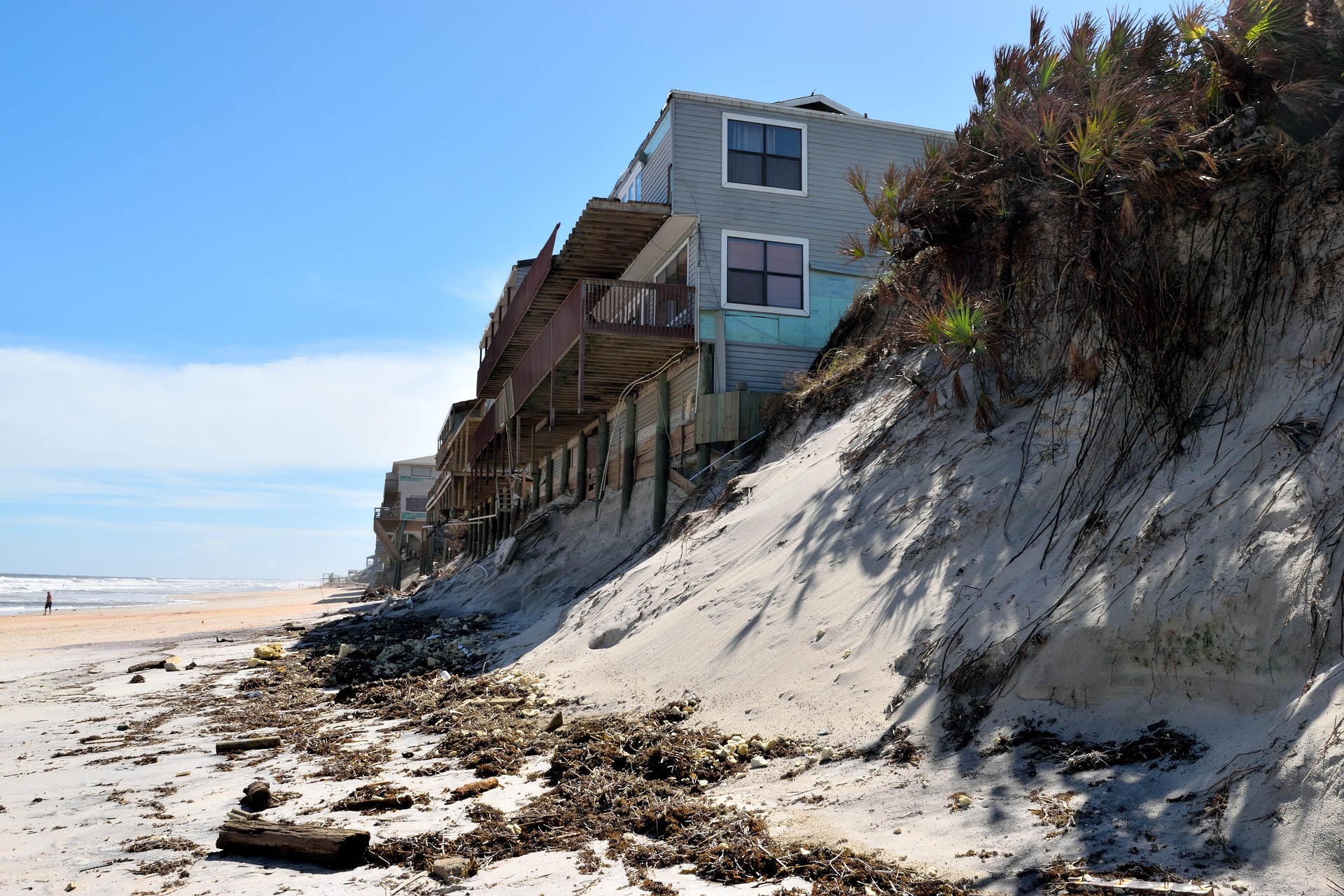
Field-Based Daily Journal: Studying Coastal Abrasion in Environmental Engineering
Keywords:
Coastal Abrasion, Shoreline Erosion, Environmental Engineering, Mangroves, Sustainable Coastal ManagementAbstract
Coastal abrasion is an increasingly critical environmental issue affecting coastal ecosystems, infrastructure, and human settlements due to the combined impacts of climate change, sea-level rise, wave dynamics, and anthropogenic activities. This study presents a four-week field-based daily journal documenting coastal erosion processes in a vulnerable shoreline area through systematic observation of shoreline retreat, wave behavior, sediment characteristics, vegetation cover, and human activities. A mixed-method approach was employed, integrating quantitative measurements such as shoreline position, sediment grain size, and wave intensity with qualitative assessments including community behavior and coastal management practices. The results indicate that abrasion rates were highest in areas lacking natural vegetation buffers and in locations exposed to high-energy waves, while mangrove-covered zones exhibited significantly lower erosion. Human activities such as sand mining and coastal construction were identified as major contributing factors to shoreline instability. The study concludes that effective coastal management requires an integrated approach combining environmental engineering interventions, nature-based solutions, continuous monitoring, and community engagement to enhance coastal resilience and sustainability.
Downloads
References
J. W. Day, J. M. Rybczyk, M. E. Mann, and J. R. Stephens, “6.18 - Climate Change: Effects, Causes, Consequences Physical, Hydromorphological, Ecophysiological, and Biogeographical Changes in Coastal Wetlands and Waters,” in Treatise on Estuarine and Coastal Science (Second Edition), Second Edition., D. Baird and M. Elliott, Eds., Oxford: Academic Press, 2024, pp. 626–641. doi: https://doi.org/10.1016/B978-0-323-90798-9.00112-8.
K. van der Geest and R. van den Berg, “Slow-onset events: a review of the evidence from the IPCC Special Reports on Land, Oceans and Cryosphere,” Curr. Opin. Environ. Sustain., vol. 50, pp. 109–120, 2021, doi: https://doi.org/10.1016/j.cosust.2021.03.008.
A. Louarn, C. Meur-Ferec, and N. Hervé-Fournereau, “The concept of ‘nature-based solutions’ applied to urban coastal risks: A bibliometric and content analysis review,” Ocean Coast. Manag., vol. 261, p. 107530, 2025, doi: https://doi.org/10.1016/j.ocecoaman.2024.107530.
J. O. Orford, “An introduction to coastal geomorphology: J. Pethick Edward Arnold, London, x+260 pp., £7•95,” Estuar. Coast. Shelf Sci., vol. 25, no. 4, pp. 485–488, 1987, doi: https://doi.org/10.1016/0272-7714(87)90044-8.
D. K. Roy and B. Datta, “Saltwater intrusion processes in coastal aquifers – modelling and management: a review,” Desalin. Water Treat., vol. 78, pp. 57–89, 2017, doi: https://doi.org/10.5004/dwt.2017.20381.
A. Thorhaug et al., “Coastal and estuarine blue carbon stocks in the greater Southeast Asia region: Seagrasses and mangroves per nation and sum of total,” Mar. Pollut. Bull., vol. 160, p. 111168, 2020, doi: https://doi.org/10.1016/j.marpolbul.2020.111168.
I. Papakonstantinou, A. T. Siwe, A. C. H. Chow, J. Sun, and S. M. Madanat, “Coastal Protection Strategies to Minimize Transportation Network Disruption from Sea Level Rise,” Transp. Res. Procedia, vol. 82, pp. 3176–3197, 2025, doi: https://doi.org/10.1016/j.trpro.2024.12.241.
P. I. Rowland, M. D. de Paula Costa, P. I. Macreadie, and M. Wartman, “Review of methods for quantifying the benefits of coastal wetlands in absorbing and buffering extreme weather event impacts on coastal infrastructure,” Ecosyst. Serv., vol. 73, p. 101722, 2025, doi: https://doi.org/10.1016/j.ecoser.2025.101722.
G. Lemos et al., “On the need of bias correction methods for wave climate projections,” Glob. Planet. Change, vol. 186, p. 103109, 2020, doi: https://doi.org/10.1016/j.gloplacha.2019.103109.